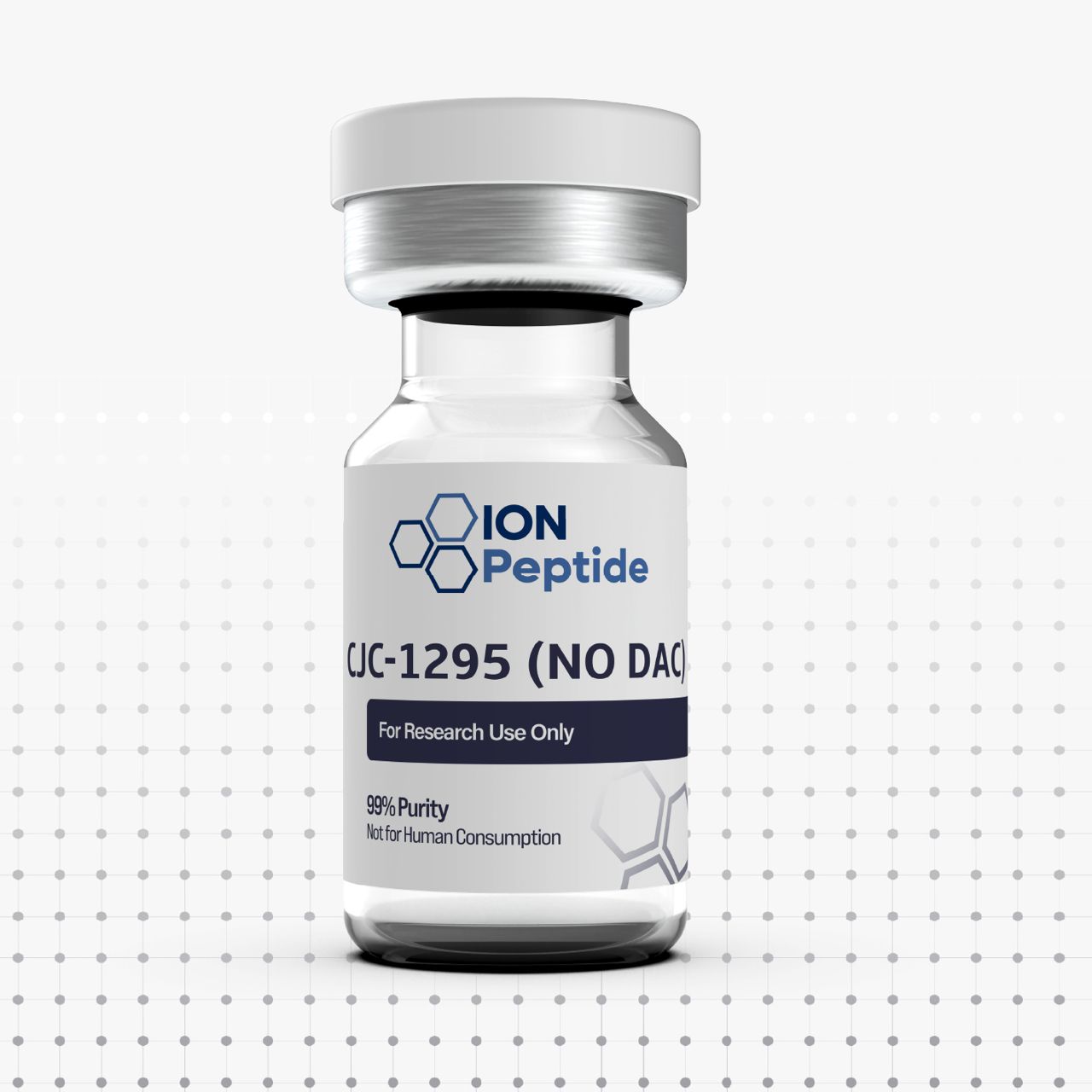
Comprehensive Laboratory Profile
The acquisition of precise, structurally stable GHRH analogs is essential for laboratories investigating endocrine signaling and cellular metabolism. By integrating the CJC-1295 10mg peptide into your research protocols, you secure a highly purified compound engineered for advanced in-vitro analysis.
Synthesized in the USA to the highest industry standards, this compound delivers the analytical accuracy required by institutional facilities. Utilizing the CJC-1295 10mg peptide ensures your facility obtains data free from the inconsistencies often found in lower-purity research materials.
Biochemical Profile: GHRH Analog
The CJC-1295 10mg peptide is a highly specific synthetic analog of Growth Hormone Releasing Hormone (GHRH). Unlike its DAC-integrated counterparts, this specific formulation provides researchers with a baseline GHRH analog that mimics endogenous signaling patterns.
In a laboratory environment, this peptide is utilized to investigate the kinetics of the growth hormone secretagogue receptor (GHS-R). Because it lacks the long-acting DAC moiety, it provides a cleaner model for studying rapid, pulsatile signaling mechanisms in isolated cellular cultures.
Mechanism of Action
When introduced to anterior pituitary cell lines, the CJC-1295 10mg peptide acts as a potent agonist of the GHRH receptor. It initiates an intracellular cascade primarily characterized by the rapid elevation of cyclic AMP (cAMP).
This pathway stimulates the production and release of growth hormone (GH) within the controlled environment. Researchers often utilize this analog to map the short-term binding affinity of GHRH receptors, providing a critical baseline for comparing against modified or longer-acting secretagogues.
Primary Research Applications
The stability and specificity of this compound make it a fundamental tool for metabolic and endocrine studies.
Current scientific literature utilizes the CJC-1295 10mg compound primarily for:
-
Pulsatile Signaling Models: Documenting the immediate intracellular response to GHRH receptor activation.
-
Secretagogue Receptor Mapping: Mapping the affinity rates of various receptors in different pituitary cell isoforms.
-
Endocrine Feedback Loops: Establishing control data for comparative studies involving GHRPs and other secretagogues.
-
Metabolic Efficiency Assays: Using the CJC-1295 10mg peptide to induce controlled GH release in isolated cell models.
Purity and Quality Assurance
At Ion Peptides, we recognize that anomalous data from impure materials compromises research outcomes. Every batch of our CJC-1295 10mg peptide is subjected to third-party analytical testing.
We utilize High-Performance Liquid Chromatography (HPLC) to verify a purity threshold of >99.0%. This ensures the isolation of the peptide from residual solvents or truncated sequences.
Furthermore, Mass Spectrometry (MS) is employed to verify the precise molecular weight. By securing your CJC-1295 10mg supply through our USA synthesis network, you guarantee materials that meet the highest echelons of analytical compliance.
Storage and Reconstitution
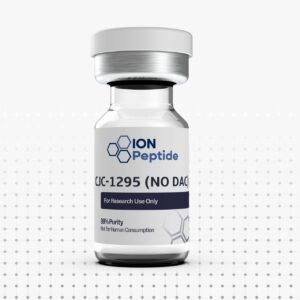
The CJC-1295 10mg vial is supplied as a lyophilized (freeze-dried) powder to ensure stability.
-
Storage: Keep vials in a climate-controlled environment at or below -20°C. Protected from light and moisture, the powder remains stable for up to 36 months.
-
Reconstitution: Utilize sterile bacteriostatic water.
-
Allow the vial to reach room temperature before opening.
-
Introduce the diluent slowly, letting it flow down the interior glass wall.
-
Do not vortex or shake. Allow the CJC-1295 10mg compound to dissolve via gentle, rotational swirling.
-
Store reconstituted solution at 2°C to 8°C and utilize within standard laboratory protocol timelines.
-
Reviews
There are no reviews yet.